
AC Infinity Grow Tent Kits
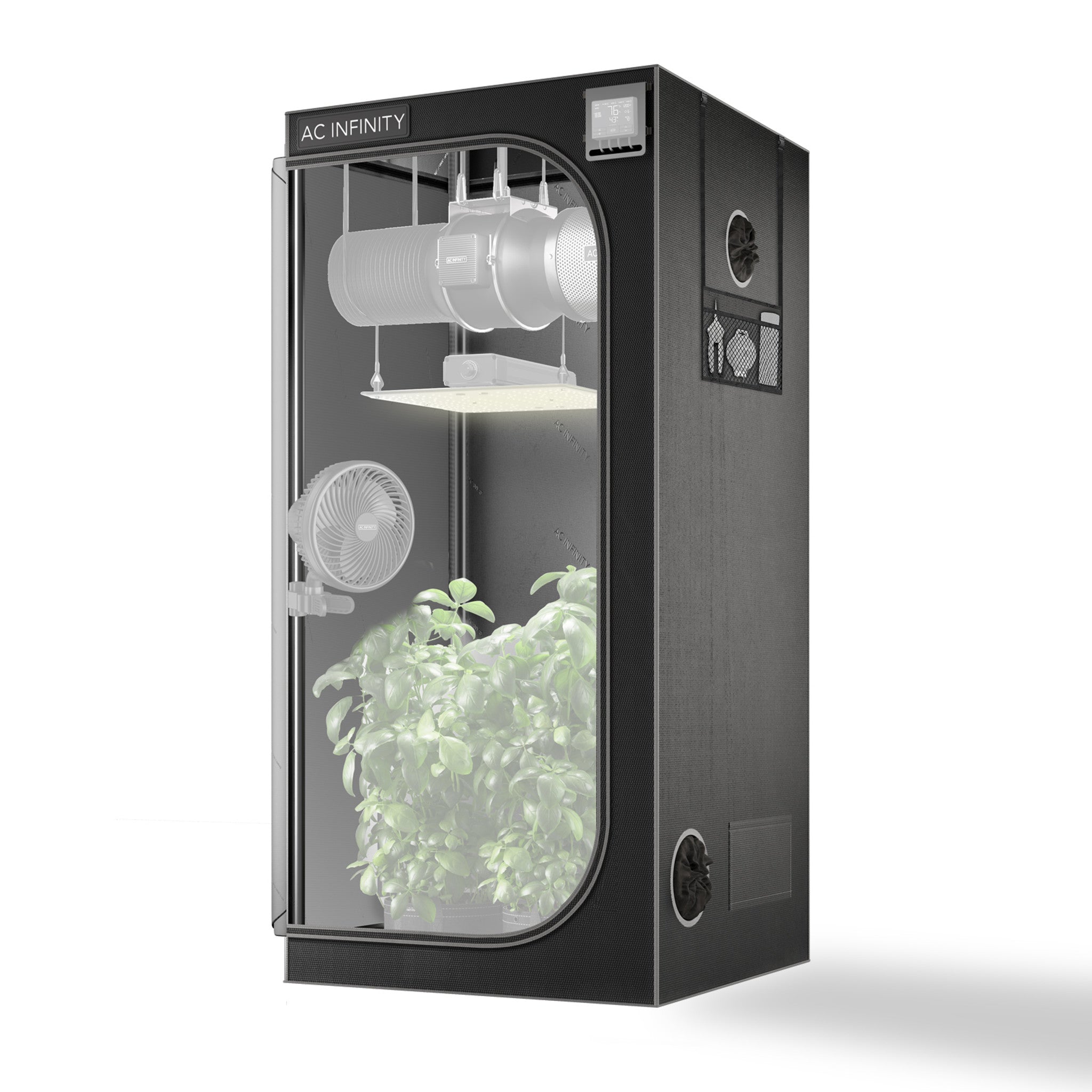
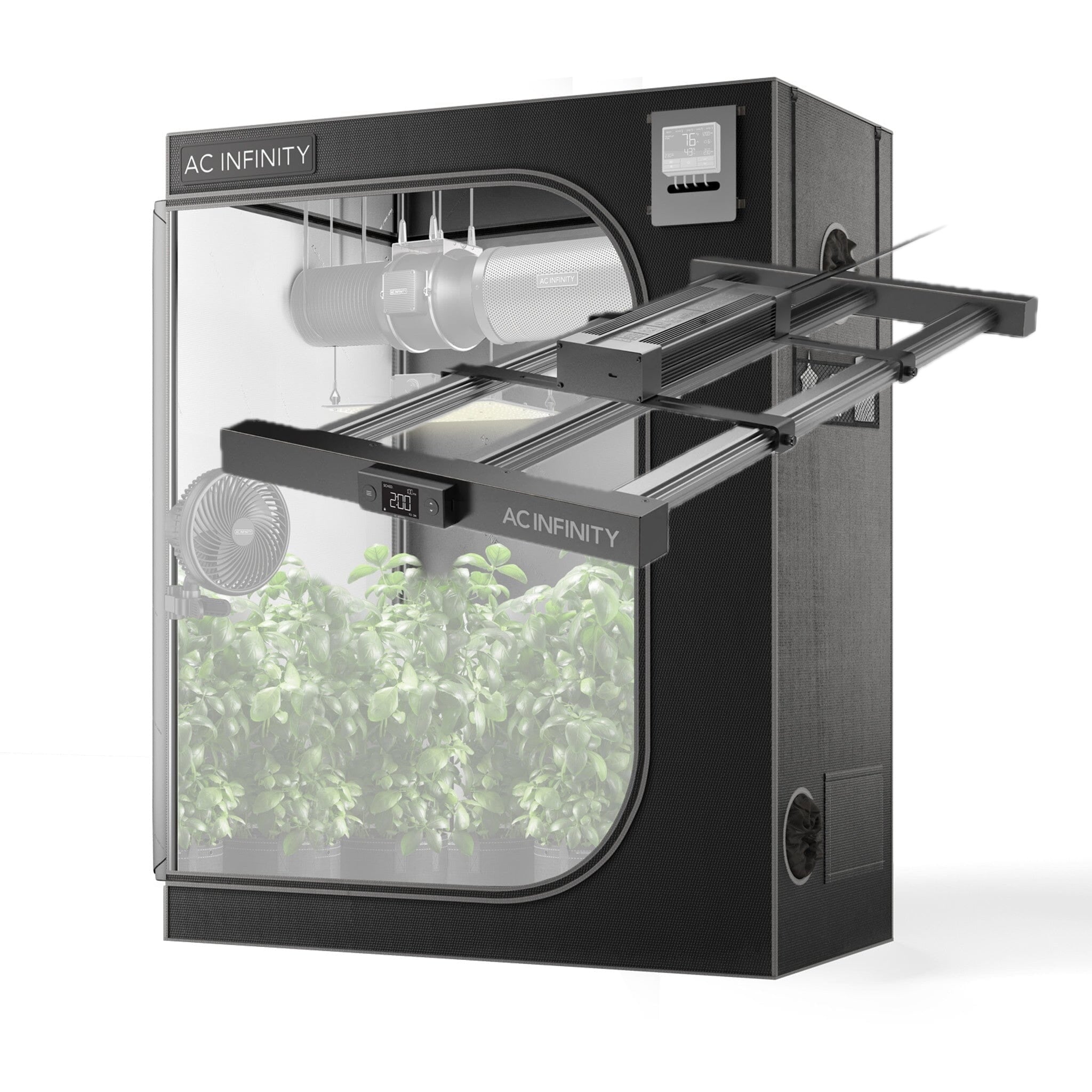
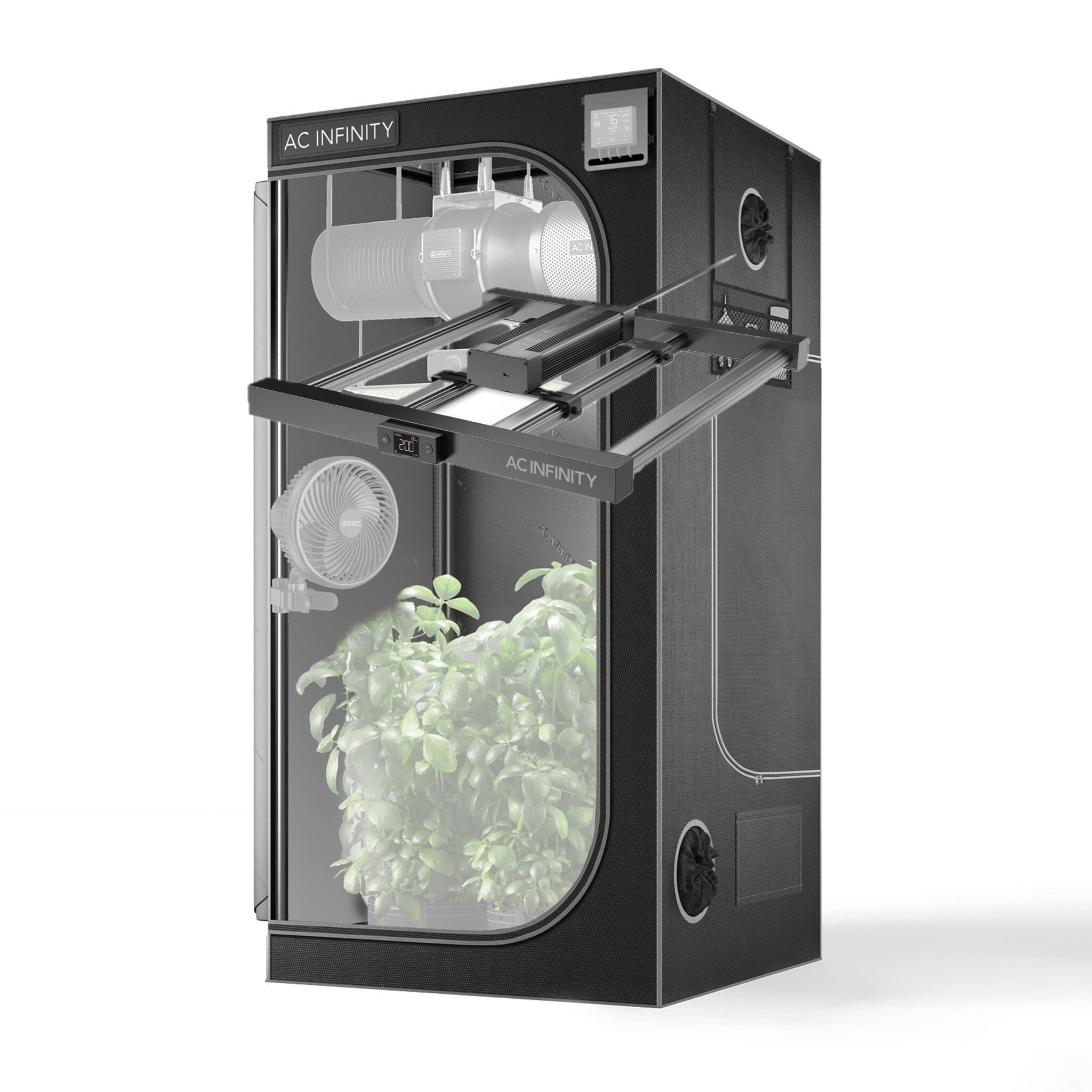


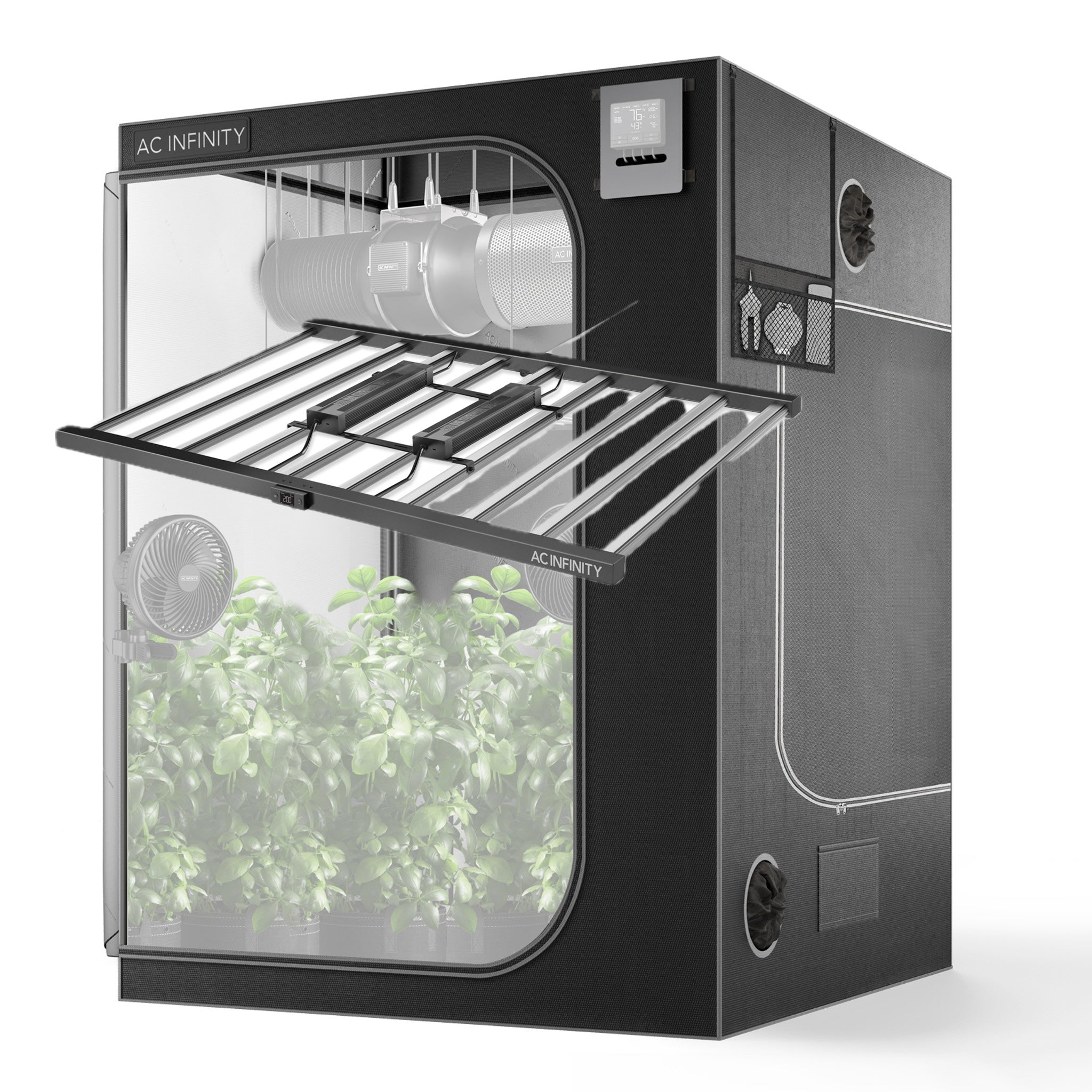
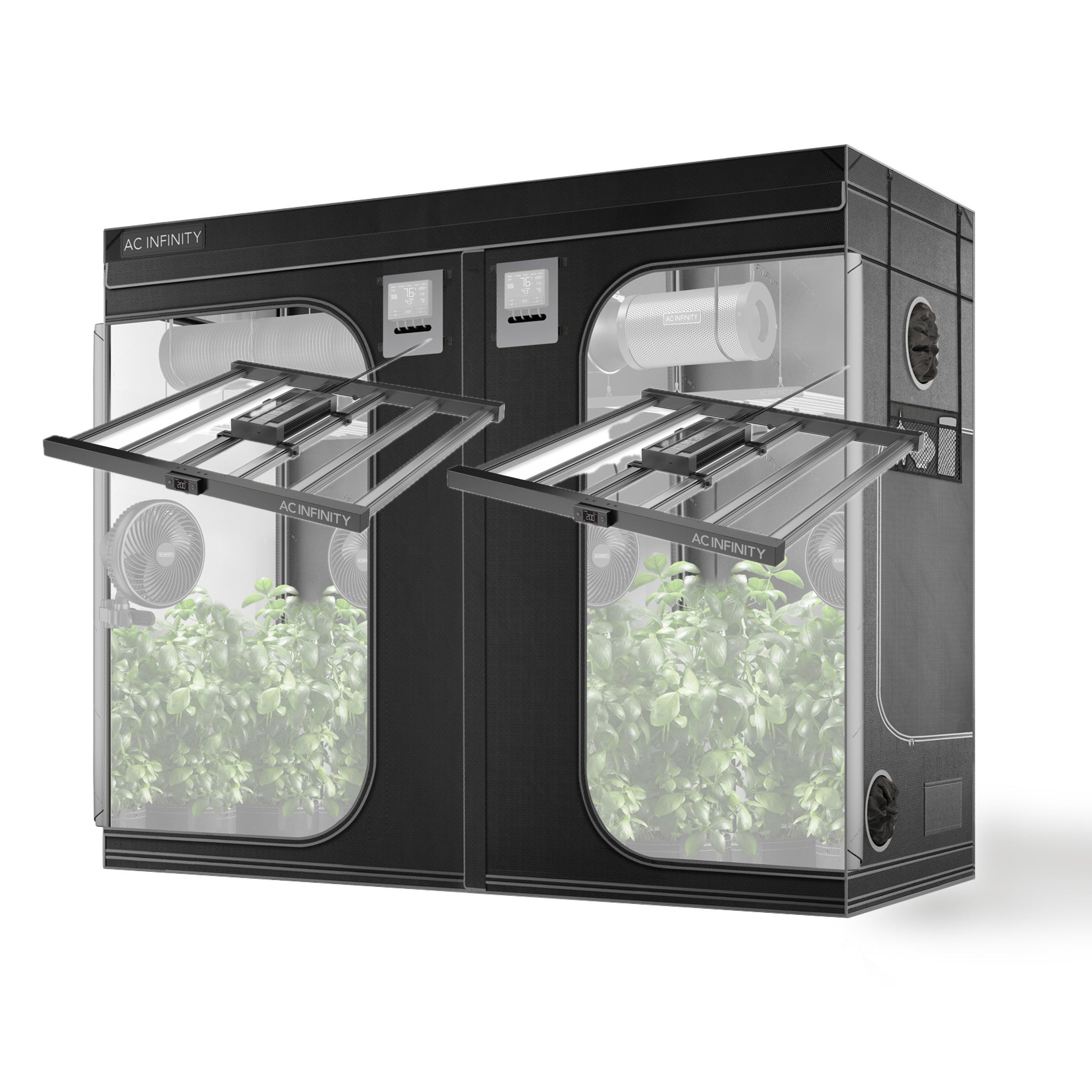
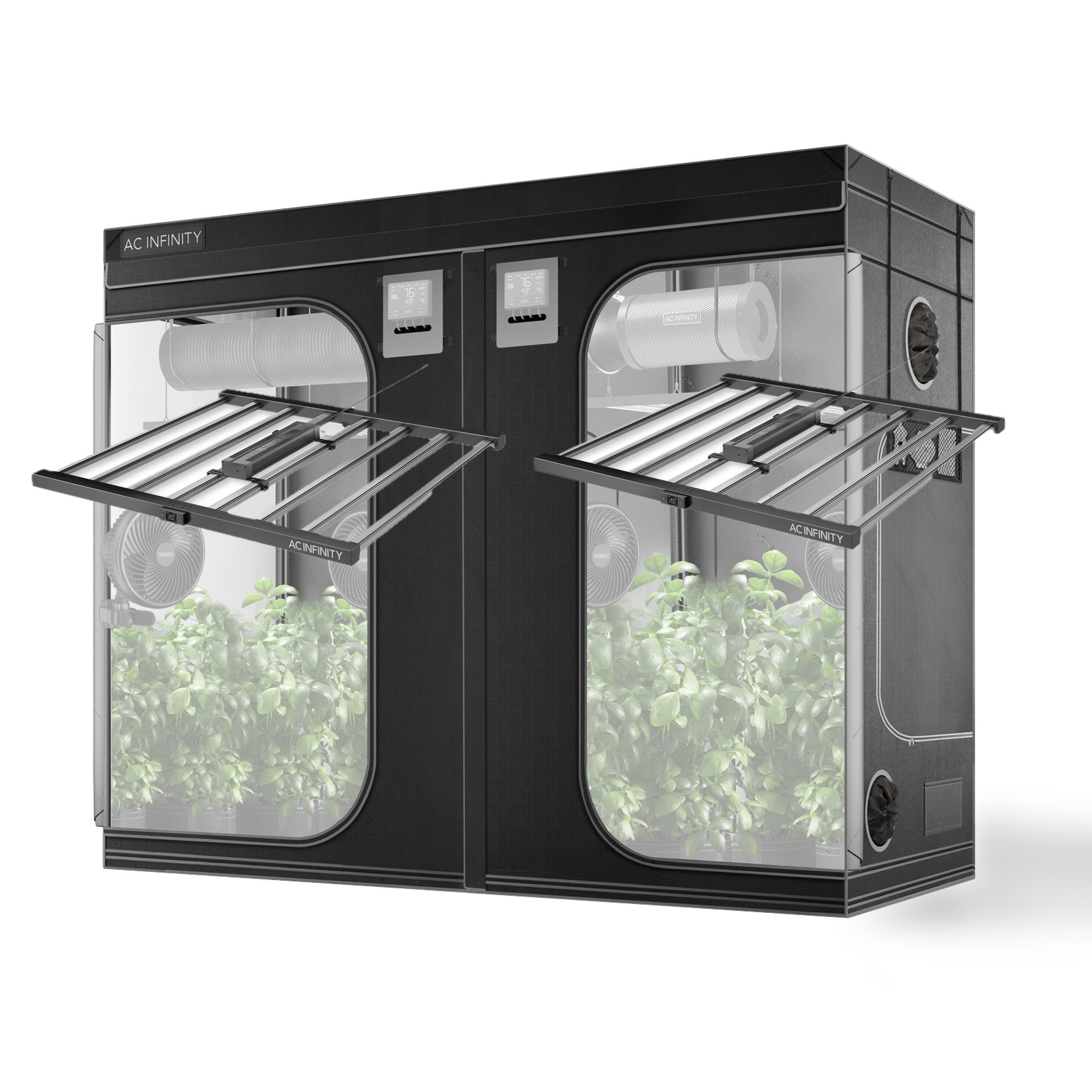
AC Infinity grow tent kits put the whole room in one box: an AC Infinity Cloudlab tent, a Cloudline PRO extraction fan with its carbon filter and ducting, an LED light sized to the footprint, circulation fans, pots and the Controller 69 Pro that runs it all. Everything is matched to everything else, so nothing is undersized and nothing is wasted — and the kit costs less than the same list bought piece by piece. Eight kits, from a 61 × 61 cm (2 × 2 ft) corner setup to a 244 × 122 cm (8 × 4 ft) double-light room. Every one ships with a Controller 69 Pro, so climate control is in the box rather than an upgrade later — and every one gives you the option to swap it for a Controller AI+ for $150 at the point you add the kit to your cart. Quick Bloom Lights is the official Australian importer: stocked in Sydney, shipped domestically.
8 kits
2×2 through to 8×4
100–1,460 W
light wattage across the range
69 Pro
controller in every kit, AI+ upgrade offered
2 years
AC Infinity warranty, handled here
Why a kit rather than a list of parts
Buying a tent setup piece by piece is entirely doable, and plenty of people do it. What catches them out is matching: a fan that overwhelms the filter, a filter rated below the fan, a light that covers four square feet in a tent that is nine, ducting in the wrong diameter, and a controller bought last because the budget ran out — which is the one part that makes the rest behave.
A kit removes those decisions. The extraction fan, filter and ducting are all the same diameter. The light is sized to the tent's footprint rather than to a marketing claim. The circulation fans scale with the floor area. And the Controller 69 Pro that comes bundled with the Cloudline fan runs the extraction on temperature, humidity or VPD from day one.
Choosing your size
Work from the space you have, not the yield you want. Measure the floor area you can give up permanently, check the ceiling height against the tent height below, and then leave yourself room to stand in front of it with the door open. A tent that fits the room on paper but cannot be opened is a tent you will come to resent.
Height is the dimension people forget. The smaller tents are 183 cm (6 ft) tall and the larger ones 203 cm (6 ft 8 in), and the light, its hangers and the filter all hang from the top bar. In a room with a 2.4 m ceiling either is fine; under a sloping roof or in a garage with services running along the ceiling, measure before you commit.
| Kit | Tent | Tent size (W × D × H) | Light | Extraction |
|---|---|---|---|---|
| 2×2, 1-plant | Cloudlab 722 | 61 × 61 × 183 cm | 4Seasons 100 W | 100 mm (4″) |
| 2×4, 2-plant | Cloudlab 642 | 122 × 61 × 183 cm | IonFrame EVO3, 280 W | 150 mm (6″) |
| 3×3, 3-plant | Cloudlab 733 | 91 × 91 × 183 cm | IonFrame EVO4, 300 W | 150 mm (6″) |
| 4×4, 4-plant | Cloudlab 844 | 122 × 122 × 203 cm | IonFrame EVO6, 500 W | 150 mm (6″) |
| 5×5, 6-plant | Cloudlab 866 | 152 × 152 × 203 cm | IonFrame EVO8, 730 W | 150 mm (6″) |
| 5×5, 6-plant (EVO10) | Cloudlab 866 | 152 × 152 × 203 cm | IonFrame EVO10, 1,000 W | 150 mm (6″) |
| 8×4, 10-plant (EVO6) | Cloudlab 894 | 244 × 122 × 203 cm | 2 × IonFrame EVO6, 1,000 W | 200 mm (8″) |
| 8×4, 10-plant (EVO8) | Cloudlab 894 | 244 × 122 × 203 cm | 2 × IonFrame EVO8, 1,460 W | 200 mm (8″) |
Tent dimensions and light wattages are AC Infinity's published figures. Plant counts are a guide to what the footprint comfortably holds, not a rule — six well-spaced in a 5×5 and ten crowded into one are different propositions, and the kit does not care either way.
What is in every kit
The contents scale with the size, but the shape is the same in all eight. This is the full list, so you can see exactly where the differences fall:
| Kit | Filter & ducting | Clip fans | Fabric pots | Trellis | Also included |
|---|---|---|---|---|---|
| 2×2 | 100 mm filter, 2 × 2.4 m ducting | 1 | 5 | 1 | Shears, 4 clamps |
| 2×4 | 150 mm filter, 7.6 m ducting | 1, or 2 at checkout | 5 | — | Shears, 4 clamps |
| 3×3 | 150 mm filter, 7.6 m ducting | 1, or 2 at checkout | 5 | 1 | Shears, 4 clamps |
| 4×4 | 150 mm filter, 7.6 m ducting | 2, or 3 at checkout | 5 | 1 | Shears, 4 clamps |
| 5×5 EVO8 | 150 mm filter, 7.6 m ducting | 2, or 3 at checkout | 5 | 1 | Shears, 4 clamps |
| 5×5 EVO10 | 150 mm filter, 7.6 m ducting | 2, or 3 at checkout | 5 | 1 | Shears, 4 clamps |
| 8×4 EVO6 | 200 mm filter, 7.6 m ducting | 4 | 10 | 2 | Shears, 4 clamps |
| 8×4 EVO8 | 200 mm filter, 7.6 m ducting | 4 | 10 | 2 | Shears, 4 clamps |
Clip fans are Cloudray S6 Gen 2. On the 2×4 through 5×5 kits the number of clip fans is a choice you make on the product page — the extra fan is offered at a lower price as part of the kit than it costs on its own, and in a taller or busier canopy it is worth taking. Fabric pots are 19 L (5 gallon) and supplied in five-packs. The 2×4 kit is the one exception on trellis netting — it ships without, because the long narrow footprint suits stakes or a single support line better than a fixed net. Add trellis netting separately if you want it.
The controller is the part that earns its place
Every kit includes the Controller 69 Pro, bundled with the Cloudline extraction fan. It is easy to read past that line on a spec list, so here is what it actually does: it reads temperature and humidity from a corded probe inside the tent and drives the extraction fan to hold a target, rather than running the fan at a fixed speed and hoping.
It runs ten speed levels with a minimum baseline, so the fan never stops entirely; it handles VPD as a target in its own right; and it takes timers, cycles and schedules. Over WiFi it adds the app — remote checking, history charts, alerts and CSV export — but it does all of its programming on its own with no network at all, which matters if the tent is in a garage with poor signal.
One controller, four devices. The 69 Pro has four independently programmable ports. Out of the box the kit uses one for the extraction fan, which leaves three free for clip fans, a dehumidifier, a heater or a UIS control plug for anything that is not a UIS device. That is the whole point of buying into UIS™ rather than assembling separate appliances: the kit is a starting point that keeps growing rather than a closed box.
Upgrading to the Controller AI+
Every kit gives you the option to swap the Controller 69 Pro for a Controller AI+ for $150. You do not have to go looking for it — add a kit to your cart and the upgrade is offered to you there.
What the extra buys is a different way of controlling the space. The 69 Pro triggers on a threshold: when it reaches this, do that. The AI+ learns how your room actually responds — how fast it heats, how quickly extraction pulls humidity down — and adjusts levels dynamically to hold the target rather than chasing it. It also runs two independent zones from one unit, and it accepts sensors the 69 Pro cannot: soil moisture, CO₂ and light, pH, EC and water temperature, and leak detection.
On the economics: the AI+ is $269.95 bought on its own, so $150 as part of a kit is comfortably the cheapest way into it. The real consideration is timing rather than money — take the upgrade at purchase and you own one controller; decide a year later and you own two, with the 69 Pro looking for a job. Worth deciding up front, either way.
Not sure? The 69 Pro is not a placeholder. It does genuine VPD, temperature and humidity control across four devices, with WiFi and full app access, and plenty of our customers run whole setups on one and never feel short-changed. Take the AI+ if you want dual-zone control, the extra sensors or the learning behaviour. Stay on the 69 Pro if you would rather have a controller that does exactly what you tell it. Neither choice limits what you can add later — the whole UIS range works with both.
A note on the 2×2 kit
Seven of the eight kits are AC Infinity from end to end. The 2×2 is the exception: it pairs the AC Infinity tent, fan, filter and controller with our own 4Seasons 100 W Quantum PAR light rather than an IonFrame. That is a deliberate choice, not a substitution — at this footprint the 4Seasons runs Samsung LM301H and EVO diodes with an integrated dimmer and an RJ11 port, and it connects to the included controller through a Type A adapter, which is supplied in the kit. Flowering coverage is 60 × 60 cm and vegetative 80 × 80 cm, which is what a 2×2 needs.
Full specifications
| Tents | AC Infinity Cloudlab Advance — 2000D canvas, reflective interior, steel frame |
| Tent heights | 183 cm on the 722, 642 and 733; 203 cm on the 844, 866 and 894 |
| Extraction fans | AC Infinity Cloudline T-series, EC motor with PWM control, dual ball bearings, IP44, 100–240 V |
| Extraction airflow | T4: 384 m³/h (226 CFM), 26 dBA · T6: 722 m³/h (425 CFM), 30 dBA · T8: 1,456 m³/h (857 CFM), 38 dBA |
| Duct sizes used | 100 mm (4″) on the 2×2; 150 mm (6″) on the 2×4 through 5×5; 200 mm (8″) on the 8×4 kits |
| Carbon filters | Australian virgin RC412 charcoal, 1200+ IAV, galvanised steel mesh, reversible aluminium flange |
| Ducting | Four-layer flexible, aluminium foil inner with spiral steel wire, PVC outer |
| Lights | Samsung LM301H EVO diodes on the IonFrame EVO range; LM301H and EVO diodes on the 4Seasons 100 W |
| Light wattage | 100 W (2×2) up to 1,460 W (8×4 dual EVO8) |
| Controller | Controller 69 Pro — four independently programmable ports, VPD, temperature and humidity targets, WiFi and Bluetooth, corded probe. Upgradeable to Controller AI+ for $150 at purchase |
| Circulation | Cloudray S6 Gen 2 clip fans, EC motor, ten speeds, ten-level automatic oscillation, IP54 |
| Pots | 19 L (5 gallon) heavy-duty fabric, supplied in five-packs |
| Also supplied | Stainless steel pruning shears, four duct clamps, hanging hardware; trellis netting on all kits except the 2×4 |
| Power connection | Australian three-pin plug |
| Warranty | Two years on AC Infinity components, handled in Sydney |
FAQ
Is a kit actually cheaper than buying the parts separately?
Yes, and that is the straightforward part of the answer. The more useful part is that it is also matched: the fan, filter and ducting share a diameter, the light suits the footprint, and the controller is included rather than deferred. Assembling the same list yourself is perfectly possible — it just takes a few evenings of cross-checking, and the usual way it goes wrong is one undersized component that quietly limits everything else.
Which kit suits a beginner?
Whichever one fits your space. There is nothing more complicated about the 5×5 than the 2×2 — same controller, same app, same assembly, just more of it. If you are choosing between two sizes and the room takes either, most people are happier having gone slightly larger: the extra headroom around the canopy makes everything easier to reach and gives the airflow somewhere to go.
Do I need anything that is not in the box?
Growing medium and nutrients, and something to water with. Everything structural is included: tent, fan, filter, ducting, clamps, light, hangers, circulation fans, pots, shears and the controller. Most people also add a second thermo-hygrometer at the canopy so they can see what is happening away from the probe, and a timer or a smart plug is unnecessary because the controller does that job.
What is the AI controller upgrade, and is it worth it?
For $150 you can swap the Controller 69 Pro that comes in the kit for a Controller AI+. The option appears when you add a kit to your cart, so there is nothing to hunt for. You are getting dual-zone control, dynamic level adjustment that learns your room rather than just triggering on a threshold, and compatibility with the soil, CO₂, hydro and water sensors. Whether it is worth it depends on you: if you want soil or nutrient-solution data, or you are running two spaces, it plainly is. If you want reliable VPD and humidity control in one tent, the 69 Pro already does that well. The one argument for deciding now is that the upgrade price only exists at purchase — buying the AI+ separately later is $269.95 and leaves you with a spare controller.
If I take the AI+ upgrade, do I still get a 69 Pro?
No — it is a swap, not an addition. The kit ships with the Controller AI+ in place of the Controller 69 Pro. That is why it is $150 rather than the full $269.95: you are paying the difference, not buying a second controller.
What is the difference between the two 5×5 kits?
The light, and nothing else. Both use the Cloudlab 866 tent, the same 150 mm extraction and filter, the same clip fan options and the same controller. One carries the IonFrame EVO8 at 730 W, the other the EVO10 at 1,000 W. The EVO10 gives you more available intensity and more headroom to dim; the EVO8 is the better value if you were not going to run the top of the range anyway. Both dim from 0 to 100% through the controller.
And the two 8×4 kits?
Same again — identical tent, 200 mm extraction, four clip fans, ten pots and two trellis nets. One runs two EVO6 lights for 1,000 W total, the other two EVO8 lights for 1,460 W. Two lights across an 8×4 is the right arrangement either way: a single fixture over that footprint leaves the ends short no matter how powerful it is.
Can I run one of these in a garage or a shed?
Yes, and many do. Two things to plan for. First, extraction has to go somewhere — through a window kit, a wall vent or a shutter exhaust fan if you are venting the whole space rather than ducting out of it. Second, an uninsulated garage swings a long way between day and night, and the controller can only extract; it cannot add heat. If winter nights drop hard where you are, budget for a heater on one of the spare controller ports.
Is the extraction fan enough on its own for odour?
The carbon filter does the odour work; the fan just moves air through it. The kits pair them correctly, so the answer is yes, provided you keep the tent running slightly negative — that is, extracting a little more than is passively coming in, so the tent walls pull in gently rather than bulging out. If air is leaving through the zips instead of through the filter, it is leaving unfiltered. The controller's minimum baseline setting is what keeps that steady.
How long do the carbon filters last?
AC Infinity's guidance is to plan on replacing the carbon filter roughly annually in continuous use, sooner in a humid space, and to keep the pre-filter sleeve washed in the meantime because that is what stops dust blinding the carbon early. Running the filter inside the tent on the intake side of the fan, which is how these kits are set up, is also what keeps the whole duct run under negative pressure.
Can I add to a kit later?
That is what UIS™ is for. The controller has four ports and the kit uses one, so there is room for clip fans, a dehumidifier, a heater, extra sensors or a control plug for non-UIS equipment. Beyond four devices, a Controller AI+ takes over with dual-zone control and keeps everything you have already bought.
Do the kits include seeds, medium or nutrients?
No — the kits are the hardware. We stock nutrients and propagation gear separately so you can pick what suits your method rather than paying for a default choice you would not have made.
Is this genuine AC Infinity stock with Australian warranty?
Yes. Quick Bloom Lights is the official Australian importer and distributor for AC Infinity. Stock is held in Sydney, orders ship domestically, every unit comes with an Australian three-pin plug, and warranty is handled here rather than through an overseas seller.