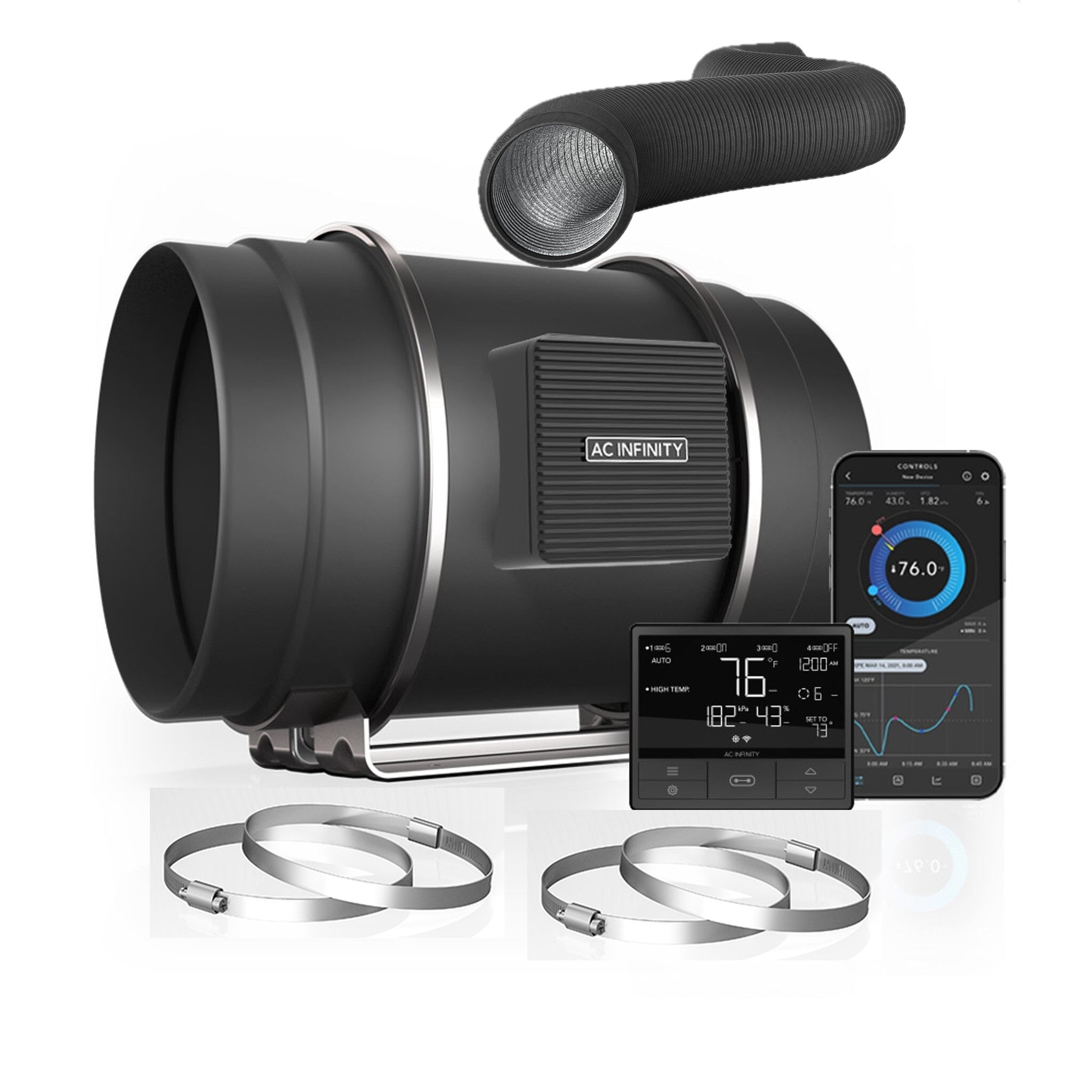
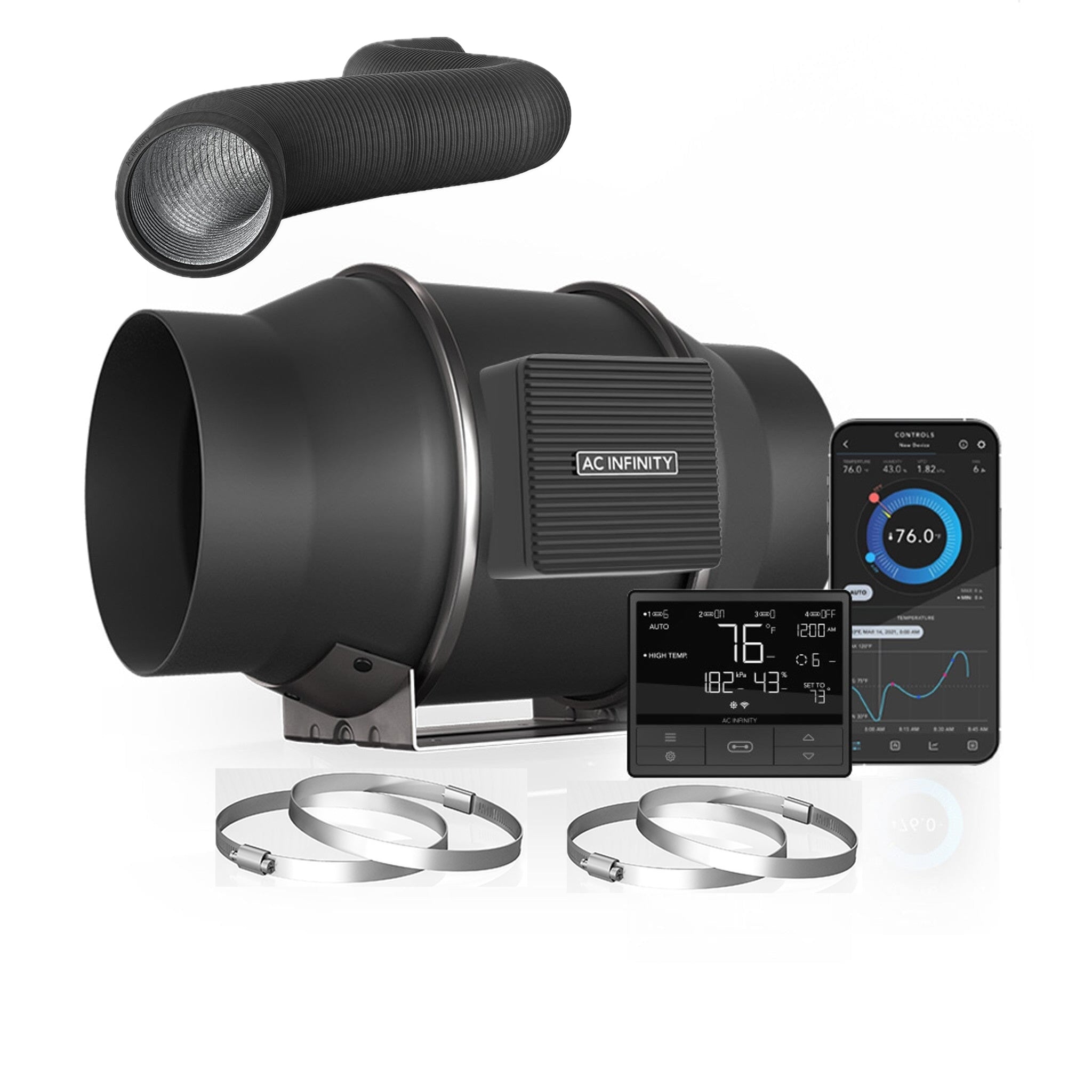
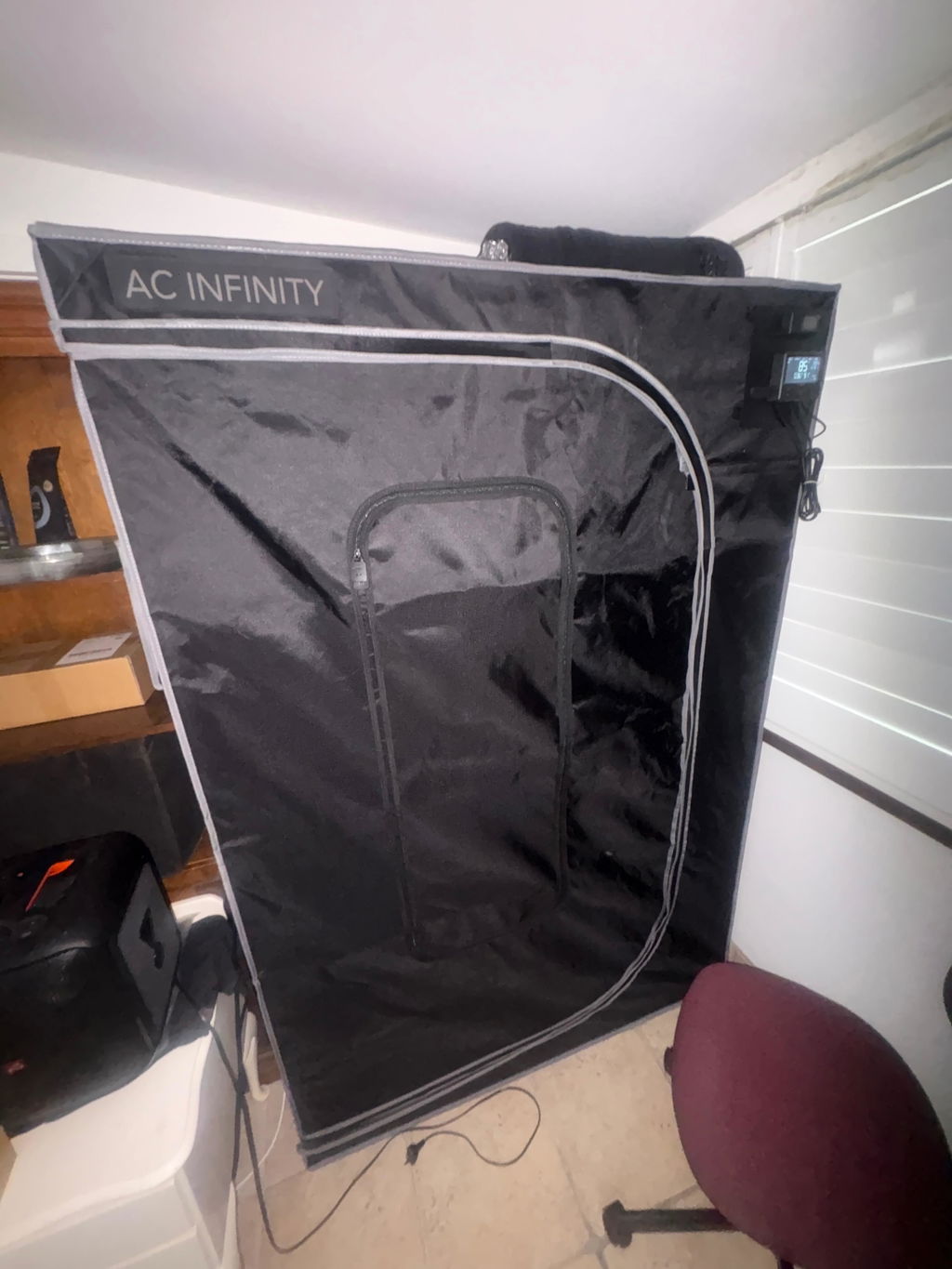
A subfloor ventilation kit is the whole system in one order — the fan, the controller that decides when it runs, the ducting and the clamps — rather than four separate purchases you have to match up yourself. Every kit here costs less than its parts bought individually, and each one is built around a different priority: app control, a long duct run, or silence under a bedroom floor.
If you are not sure a fan is what you need yet, start with the subfloor ventilation guide instead. It covers how to tell whether you have a subfloor problem, how to check your existing vents against the NCC minimum, and the cases where clearing a blocked vent fixes the house for nothing.
From $349.95
complete kit, fan to clamps
150 & 200 mm
the two sizes most subfloors need
7.6 m
of ducting in the AC Infinity kits
2-year warranty
Sydney stock, handled locally
The three kits compared
| Kit |
Best for |
Price |
AC Infinity 150 mm Subfloor Kit
CLOUDLINE PRO T6, Controller 69 Pro, 7.6 m ducting, 4 clamps
|
The standard Australian house — moderate footprint, a reasonably short and direct duct run. 722 m³/h at 30 dBA. WiFi app control, humidity triggers, climate history. |
$386.95
parts: $417.95
|
AC Infinity 200 mm Subfloor Kit
CLOUDLINE PRO T8, Controller 69 Pro, 7.6 m ducting, 4 clamps
|
Large footprints and long or bendy runs. 1,456 m³/h at 746 Pa — roughly double the airflow through the same restrictive ductwork. Same WiFi control. |
$499.95
parts: $549.00
|
VIND 200 mm Silenced Subfloor Kit
VIND 200 mm silenced fan, manual controller, 1 m acoustic ducting
|
A fan running directly under a bedroom. The acoustic chamber is built into the fan rather than bolted onto the duct afterwards. 995 m³/h at 47 dB. Direct-wired — no app, no account. |
$349.95
parts: $379.90
|
WiFi control or no app at all?
This is the real choice between the two ranges, and neither answer is wrong.
| AC Infinity kits |
The Controller 69 Pro gives temperature and humidity triggers, proportional speed, timers and schedules, plus WiFi for remote control, push alerts and season-long climate charts. Worth it when the gear is somewhere you would rather not crawl to check on, or when you want evidence the subfloor is actually drying out. |
| VIND kit |
Direct-wired with a manual speed controller and a large display on the unit. No WiFi, no pairing, no account, and nothing to stop working when a phone updates. Add the VIND Temperature & Humidity Controller at $79.95 if you want it running on humidity without an app. |
What a kit does not include
None of these kits include the external wall grille or the vermin screen, because the right one depends on your cladding, where the duct exits and whether you are cutting a new opening or reusing an existing vent. Most installs also want a backdraft damper so wind cannot blow back down the duct when the fan is off. Both are in the main subfloor ventilation range, and if you send us a photo of where the duct will exit we will tell you exactly what to add.
Which size?
Work it from volume rather than house size: floor area × average ground-to-bearer clearance gives the subfloor volume, multiply by your target air changes per hour, then divide by roughly 0.6 to allow for duct losses. Most average homes land on one 200 mm fan or two 150 mm fans.
Layout matters as much as the number. Extract from the dampest side — usually the shaded elevation or the one against a retaining wall — and let fresh air draw in through existing vents on the opposite side. Two smaller fans at opposite ends often beat one larger fan in the middle, because cross-flow sweeps the whole void. Between two sizes, take the bigger one and run it slower: quieter, less power, longer life. The guide has the worked example and the fan sizing calculator covers what each bend costs.
FAQ
Is a kit actually cheaper than buying the parts?
Yes, on every one. The 150 mm kit is $386.95 against $417.95 for the fan, ducting and clamps separately; the 200 mm kit is $499.95 against $549.00; the VIND kit is $349.95 against $379.90. You also get it as a single order rather than four line items to match up.
Do I need the WiFi version?
No — a fan on a manual speed controller will run indefinitely and ventilate the space. What automation buys you is the fan running only when it is achieving something, which cuts noise, power and wear, and lets you see whether the subfloor is actually drying out over a season. If you would rather not have an app involved at all, the VIND kit is direct-wired and the VIND controller adds humidity triggers without one.
Can I install a kit myself?
For most houses, yes. Every fan ships with an Australian three-pin plug and a lead, so if there is a suitable outlet within reach the work is carpentry — cutting the opening, running the duct, weathering the outside and hanging the fan on its straps. Running a new circuit or outlet, or hard-wiring a unit, is licensed electrical work in Australia. Before going under the house, be aware that older subfloors can contain asbestos and live wiring, and a low crawl space carries a real confined-space risk.
Will a kit fix rising damp?
No. A kit exchanges humid air for drier outside air, which is the right fix for musty smells, mould on the underside of floorboards and timber decay. It does nothing about water arriving — standing water, a blocked or badly graded drain, a leaking pipe, an air conditioner condensate line or a failed damp course are building problems and need fixing first. If the subfloor is visibly wet rather than merely humid, sort the water before ordering a fan.
What if I only need the fan?
Then buy the fan on its own — the whole subfloor and underfloor ventilation range is there, including the wall-mounted AIRTITAN T8 for crawl spaces where a ducted install is impractical. The kits exist because most people fitting one of these for the first time need the ducting and clamps anyway and would rather not work out which to order.