
AC Infinity Shutter Exhaust Fans


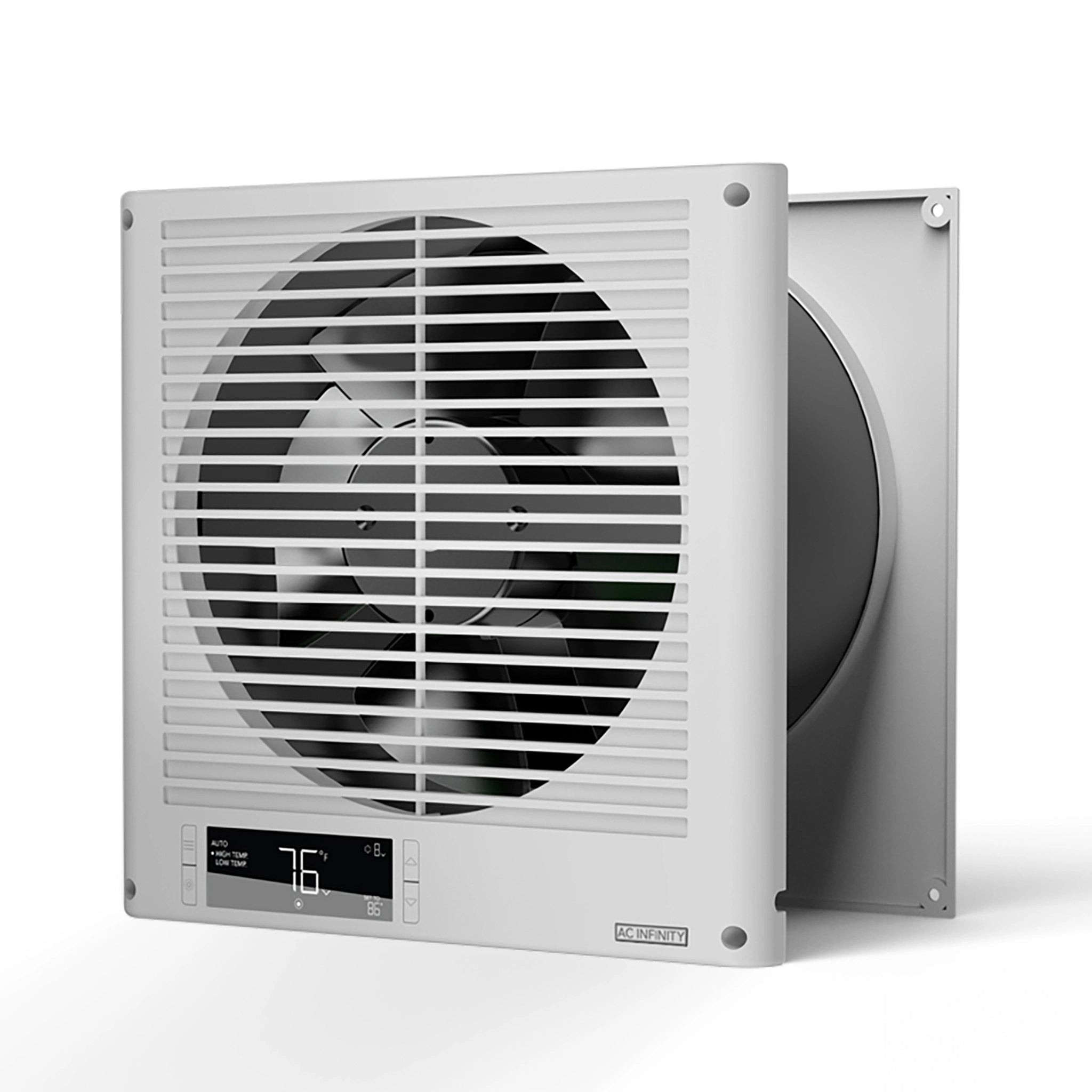


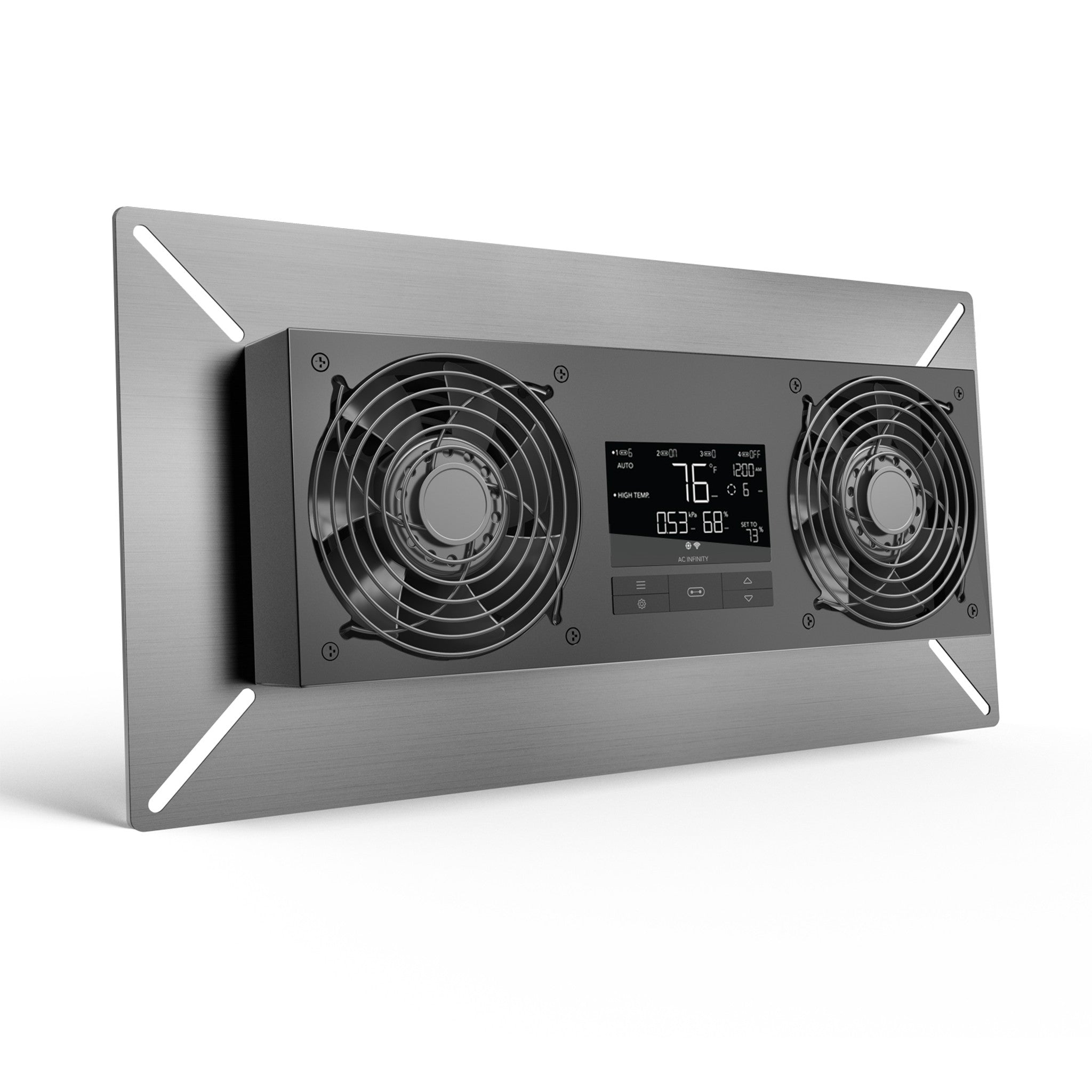
A shutter exhaust fan pulls stale, hot or damp air out of a space through an exterior wall, and closes itself when it stops. AC Infinity's Airlift range does that with an EC motor rather than a cheap shaded-pole one, and ships with a temperature and humidity controller in the box — so the fan runs when the space needs it rather than whenever someone remembers the switch. Used mostly in workshops, garages, sheds, subfloors and laundries; also a common choice for venting a sealed grow room. Quick Bloom Lights is the official Australian importer: stocked in Sydney, shipped domestically.
254–508 mm
three sizes (10, 14 and 20″)
67,000 hours
dual ball bearings, AC Infinity rated
54–230 W
power draw across the range
IP44
dust and splash rated
Plug type on the T14 and T20. AC Infinity supply these two models with a US-style plug on the lead. Easily handled — a plug adapter does it, or a licensed electrician can fit an Australian lead, which is worth doing at the same visit since the fan is going into a wall to stay. The unit is rated 100–240 V, so Australian mains voltage is not a factor; it is only the plug on the end. The T10 and the Room to Room Fan arrive with an Australian plug. Message us and we will point you the right way.
The shutter is the point
An ordinary extraction fan in a wall leaves a hole in your building. Wind blows back through it, insects and dust come in, and in winter you lose heat through it around the clock.
The Airlift's shutters are steel and gravity-operated: airflow pushes them open when the fan runs and they fall shut when it stops. No latch to fail, nothing to set. That is what makes a shutter fan the right pick for an exterior wall, and why it is a different product from an inline duct fan, which belongs in a duct run rather than in the wall itself.
Sizing it to the space
The usual method is air changes per hour — how many times you want the whole volume of the space replaced in an hour. Work out the room volume in cubic metres (length × width × height), multiply by the air changes you want, and that is your m³/h. A workshop or garage is usually specified somewhere around 6–10 air changes per hour; a hot roof space or a room with a real moisture problem wants considerably more.
| Model | Airflow | Power | Noise | Wall opening | Plug |
|---|---|---|---|---|---|
| Airlift T10 | 1,072 m³/h (631 CFM) | 54 W | 67 dBA | 274 × 274 mm | Australian |
| Airlift T14 | 2,571 m³/h (1,513 CFM) | 70 W | 68 dBA | 373 × 373 mm | US-style |
| Airlift T20 | 5,819 m³/h (3,425 CFM) | 230 W | 65 dBA | 565 × 565 mm | US-style |
Airflow figures are AC Infinity's free-air ratings, measured with nothing restricting the fan. A grille, a long duct run or a dirty filter will pull real-world delivery below these numbers, so leave yourself headroom rather than sizing exactly to the figure. Working on a grow space? Use our exhaust fan size calculator.
Worth knowing before you buy: these are not quiet
We would rather say this up front than have it arrive as a surprise. AC Infinity rate the T10 at 67 dBA, the T14 at 68 dBA and the T20 at 65 dBA at full speed. That is a working noise level, not a background one — comparable to a loud conversation happening in the room. A high-volume fan moving thousands of cubic metres an hour through a wall opening cannot be silent, and no brand's can.
Two things take the edge off it. The controller runs ten speed levels, and most installations settle well below maximum once the space is holding temperature — noise falls away quickly as you come down the range. And because the fan is triggered by temperature or humidity rather than left running, it is off most of the time in a lot of setups. If the space is somewhere you need quiet while you work, size up and run slower rather than buying small and running it flat out.
Moving air between rooms rather than out of the building
A shutter fan solves a different problem from the Room to Room Fan, which is also in this collection and is sometimes the better answer. That one fits through an internal wall and transfers air between two spaces — reversible, with a sensor on each side, so it can even out a room that runs hot or cold against the rest of the house. At 595 m³/h (350 CFM), 12.5 W and 23 dBA it is a genuinely quiet appliance, which the shutter fans are not.
The rule of thumb: if the air needs to leave the building, you want a shutter fan on an exterior wall. If one room is stuffy and the next one is fine, you want the Room to Room fan and no hole in your external cladding.
Grilles, vents and shutters
The rest of this collection is the passive hardware that finishes a run: wall-mount duct grille vents in white steel at 100, 150 and 200 mm (4, 6 and 8″), a plastic 100 mm version, shutter grilles at 100 and 150 mm that close against backdraft without a fan behind them, and register grilles at 100 × 300 and 150 × 300 mm (4 × 12 and 6 × 12″) for terminating a duct into a room. They matter more than they look: a duct that ends in a ragged hole, or a grille with too little free area, undoes a good fan.
Full specifications
| Manufacturer | AC Infinity Inc. |
| Airlift T10 | AC-ALT10 — 1,072 m³/h (631 CFM), 54 W, 67 dBA, 96 Pa |
| Airlift T14 | AC-ALT14 — 2,571 m³/h (1,513 CFM), 70 W, 68 dBA, 70 Pa |
| Airlift T20 | AC-ALT20 — 5,819 m³/h (3,425 CFM), 230 W, 65 dBA, 107 Pa |
| Room to Room Fan | AC-TWT8 — 595 m³/h (350 CFM), 12.5 W, 23 dBA, 68 Pa |
| Motor | EC motor with PWM speed control, ten levels |
| Bearings | Dual ball, rated 67,000 hours by AC Infinity (50,000 on the Room to Room) |
| Shutters | Steel, gravity-operated, close when the fan stops |
| Blades | Aluminium |
| Ingress protection | IP44 (Airlift range) |
| Voltage | 100–240 V AC |
| Operating range | 0–60°C, 35–85% RH |
| Sensor probe lead | 3.7 m (12 ft) |
| Fan-to-controller lead | 3.0 m (10 ft), Airlift T-series |
| Controller included | Controller 69 Pro on the Airlift T-series; LCD panel, app and IR remote on the Room to Room Fan |
| Certification | CE |
| Plug fitted | Airlift T10 and Room to Room Fan: Australian. Airlift T14 and T20: US-style — adapter, or an Australian lead fitted by a licensed electrician |
UIS™ and app control: the Airlift T-series ships with a Controller 69 Pro and a 3.7 m sensor probe, so the fan triggers on a temperature or humidity target out of the box — no separate thermostat, no extra purchase. Because it is a UIS device it can also share a controller with other AC Infinity equipment, which is the point at which a shed or a sealed room stops being several appliances working against each other.
FAQ
What size hole do I need to cut?
The T10 needs a 274 × 274 mm opening, the T14 373 × 373 mm and the T20 565 × 565 mm. The unit itself is larger than the opening in each case, because the frame overlaps the wall. Measure the fan against the wall and mark it before you cut anything — AC Infinity's own manual says the same, because a hole cut to a figure off a website and not to the fan in your hands is a hole you cannot un-cut.
How loud is it, honestly?
At full speed, loud: 65–68 dBA depending on the model. That is the level of a raised conversation, and it is what moving that much air through a wall costs. On the lower speed levels it drops away considerably, and on a temperature or humidity trigger it spends much of its time off entirely. If silence matters, buy a size up and run it slowly.
Can I mount it on an outside wall exposed to weather?
The Airlift range is IP44, which means protected against dust and against splashing water from any direction. That covers a normal exterior wall installation, rain hitting the shutters, and a damp subfloor or shed. It does not mean submersible or suitable for driving rain straight into the housing — give it an eave, a hood or a sheltered aspect if the wall is fully exposed.
What about the US plug on the T14 and T20?
That is how AC Infinity supply those two models, so we say so plainly rather than leaving it to the unboxing. It is a small job, not a problem: use a plug adapter, or have a licensed electrician fit an Australian lead. Since both models are being installed into a wall anyway, folding it into that visit is the tidiest option. The fan is rated 100–240 V so Australian mains voltage suits it fine — the plug on the lead is the only difference. The T10 and the Room to Room Fan come with an Australian plug. Message us if you want a hand working out which route suits your install.
Do I need an electrician?
The fan and controller come with a plug and lead, so if there is a suitable outlet it is a carpentry job rather than an electrical one. Cutting the opening, framing it and weathering the outside is the real work. Any new fixed wiring, any new outlet, or hard-wiring the unit is a licensed electrician's job in Australia — not optional and not a DIY item.
Will these work for a grow room?
Yes, and plenty of our customers use them that way, but pick deliberately. A shutter fan vents a whole sealed room or a lung room through a wall, and it is the cheapest way to shift a large volume. What it will not do is run a filtered, ducted extraction path — there is nowhere to fit a carbon filter, and odour leaves with the air. If you need odour control or ducting, an inline duct fan with a carbon filter is the right tool and a shutter fan is not.
Does the controller need WiFi?
No. The Controller 69 Pro runs its temperature and humidity programming on its own, with the probe plugged into it, and keeps doing so with no network at all. WiFi adds the app: remote checking, data history and alerts. Useful in a shed at the bottom of the garden, unnecessary if you walk past the thing every day.
Can I run it on a normal light switch or a dimmer?
Use the controller it comes with. An EC motor is not a device to put on a household dimmer — the speed control is done properly by PWM inside the unit, and a dimmer will at best do nothing useful and at worst damage it. If you want simple on/off, set the controller to a fixed level.
Is this genuine AC Infinity stock with Australian warranty?
Yes. Quick Bloom Lights is the official Australian importer and distributor for AC Infinity. Stock is held in Sydney, orders ship domestically, and warranty is handled here rather than through an overseas seller.