

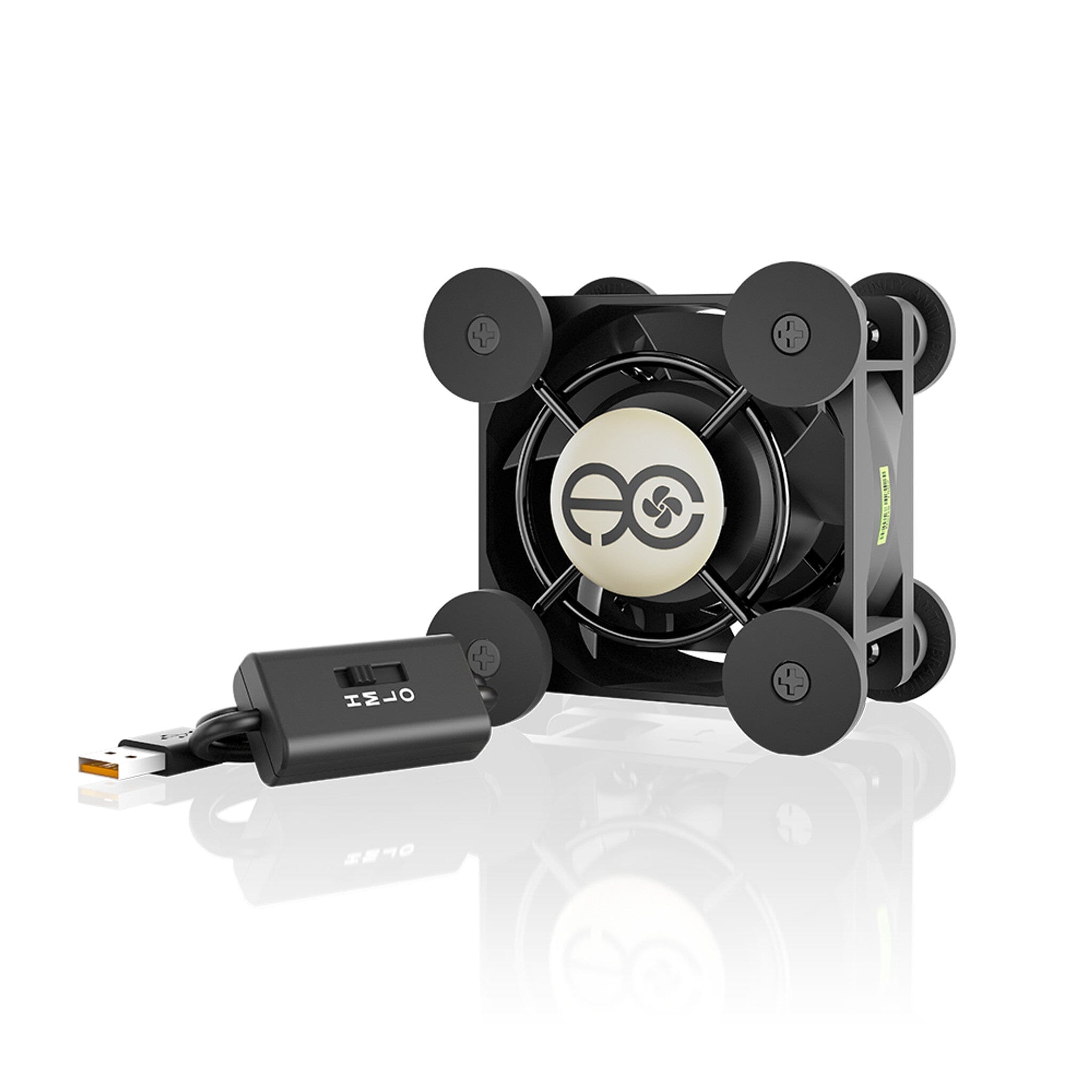
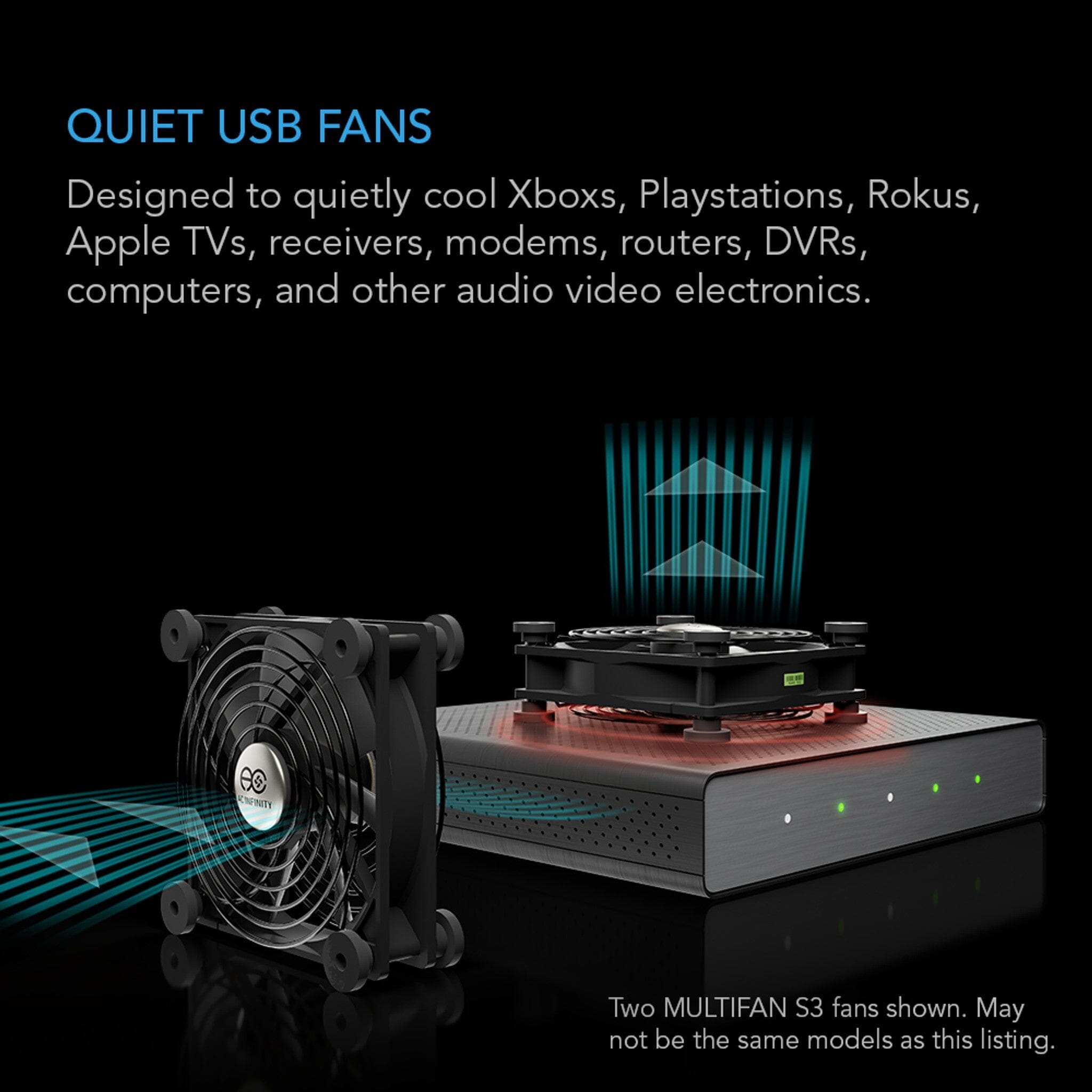
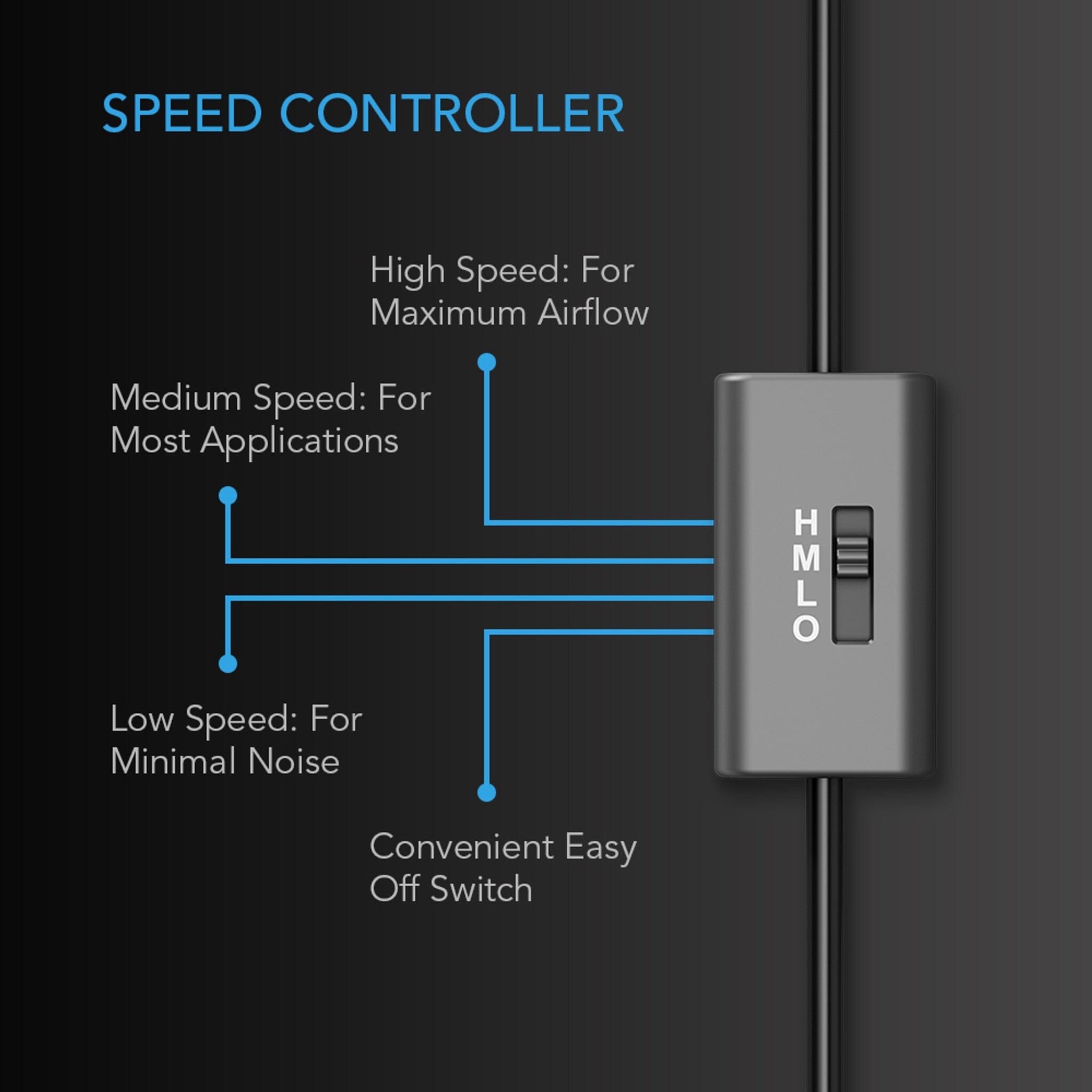


The MULTIFAN S1 is the small one — a single 80 mm fan, 8 cm square and 2.5 cm thick, for the gaps where nothing bigger will go. 26 CFM at 17 dBA makes it the quietest fan in the range on paper, and the one people end up putting under a modem, behind a router, inside a shallow cabinet or on top of a set-top box that runs hot. USB powered, with an in-line speed dial so you can turn it down until it disappears.
Small enough to fit where the heat actually is
Most cooling problems in home electronics are not about volume of air, they are about getting any air at all to a hot component in a confined space. A device sitting flush on a shelf with 3 cm of clearance has no chance of a 140 mm fan fitting anywhere useful — but an 8 cm square, 2.5 cm thick fan slides in underneath or behind it.
That small frame is also why the S1 spins faster than its bigger siblings at 2,000 RPM, and why it carries the highest static pressure of the single fans at 1.6 mm-H₂O — useful when the air has to squeeze past cabling and casework rather than moving through open space.
Built to run for years, not months
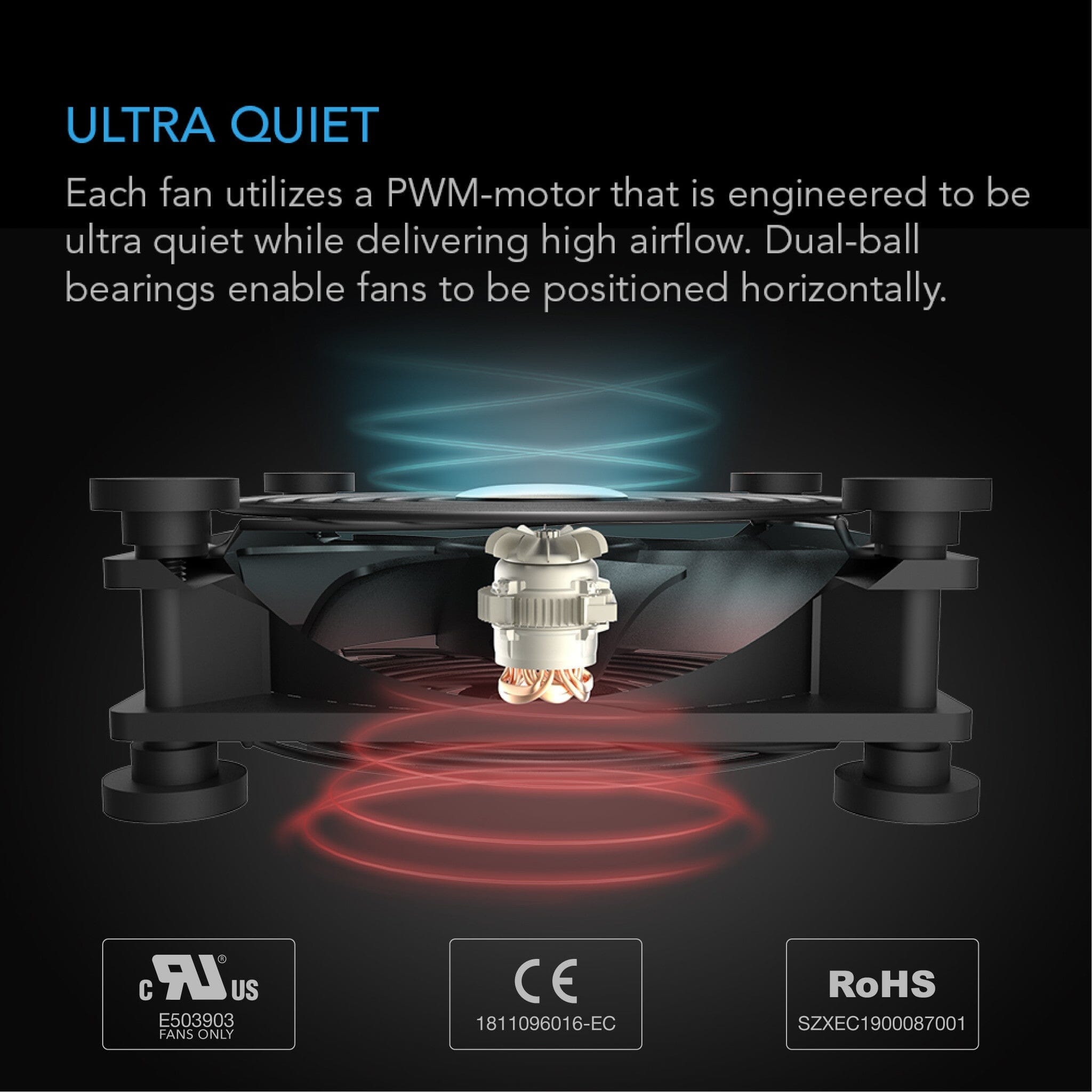
Dual ball bearings rated by AC Infinity at 67,000 hours, and the fan mounts horizontally or vertically — sleeve-bearing fans object to one of those orientations and fail early in it. The fans themselves are UL-507 recognised, and the unit is CE and RoHS certified.
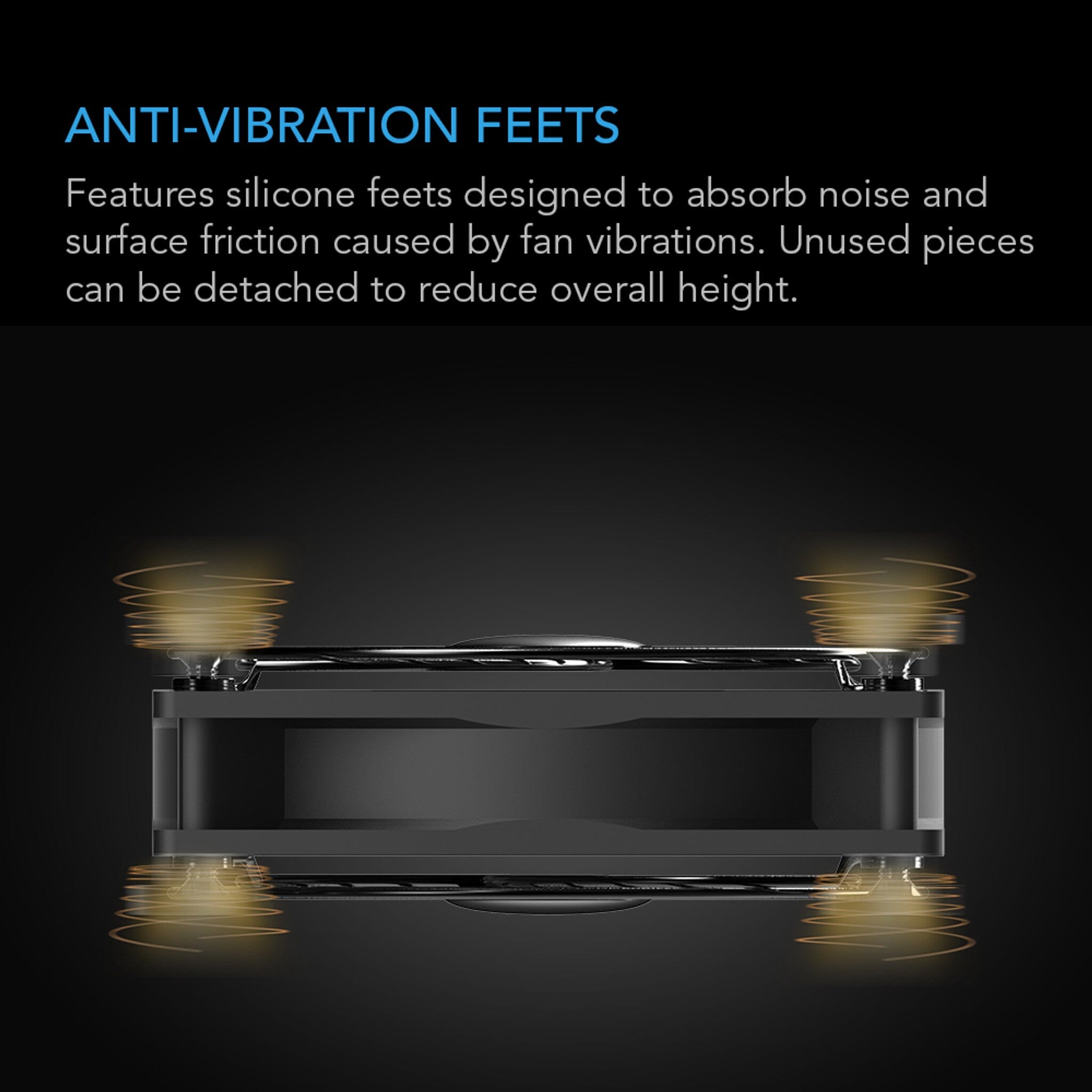
The in-line dial has a power switch and sits on the cord, so it ends up somewhere reachable rather than behind the gear. Eight anti-vibration rubber feet come in the box; they matter, because a fan resting directly on a hollow shelf turns the shelf into a soundboard and that is usually what someone is hearing when a quiet fan sounds loud.
Specifications
| Manufacturer | AC Infinity Inc. |
| Product / model | MULTIFAN S1 / AI-MPF80A |
| UPC | 854759004327 |
| Configuration | Single 80 mm fan |
| Dimensions | 8.0 × 8.0 × 2.5 cm (3.2 × 3.2 × 1.0 in) |
| Hole-to-hole spacing | 7.2 × 7.2 cm, Ø0.4 cm screw holes |
| Airflow | 26 CFM |
| Noise | 17 dBA |
| Speed | 2,000 RPM |
| Static pressure | 1.6 mm-H₂O |
| Operating voltage | 3–7 V DC (USB) |
| Power / current | 1.1 W / 0.22 A |
| Power cord | 1.8 m (6 ft) |
| Controller | In-line multi-speed dial with power switch |
| Daisy-chaining | Pass-through USB port — up to four units on one power source |
| Operating range | 0–70 °C / 35–85% RH |
| Bearings | Dual ball, rated 67,000 hours (manufacturer rating) |
| Mounting | Horizontal or vertical |
| In the box | Fan, in-line speed controller, eight anti-vibration rubber feet, 1.8 m USB cord |
| Certifications | UL (fans) · CE · RoHS |
| Product manual | Download PDF |
FAQ
Is 26 CFM enough to make a difference?
For one warm device in a confined space, yes — most of the benefit comes from breaking up the pocket of still hot air sitting against the casing, and that does not take much air. For a cabinet with several devices in it, or a receiver working hard, step up to the S3 or a dual unit.
S1 or S3?
Fit decides it. If a 120 mm fan will physically go where you need it, take the S3 — twice the airflow for one extra decibel, because a bigger fan turns more slowly for the same air. The S1 exists for the spaces where 12 cm simply will not fit.
Where does it plug in?
Any USB port — most people use one on the back of the device being cooled, so the fan powers up and down with it. A USB wall adapter or power bank works too. It runs on 3–7 V DC, so there is no mains wiring and nothing to install.
Can I run several from one port?
Yes. Each unit has a pass-through USB port, so up to four fans can daisy-chain onto one power source — which is how most multi-shelf and rack setups get built.
Should it blow at the device or pull air away?
Pull away, usually. Heat rises and collects, so extracting from the hottest point and letting cooler room air flow in behind it works better than blowing at a hot casing. In a closed cabinet you want both, which is what the dual S5 is for.
Will it pull air through a duct or a filter?
No. This is a low-pressure fan for moving air across open components; attach ducting or a filter and the airflow collapses. If the air has to travel through something, use an inline duct fan.
Is this genuine AC Infinity stock with Australian warranty?
Yes. Quick Bloom Lights is the official Australian importer and distributor for AC Infinity. Stock is held in Sydney, orders ship domestically, and the two-year warranty is handled here rather than through an overseas seller.